One objective, two signals
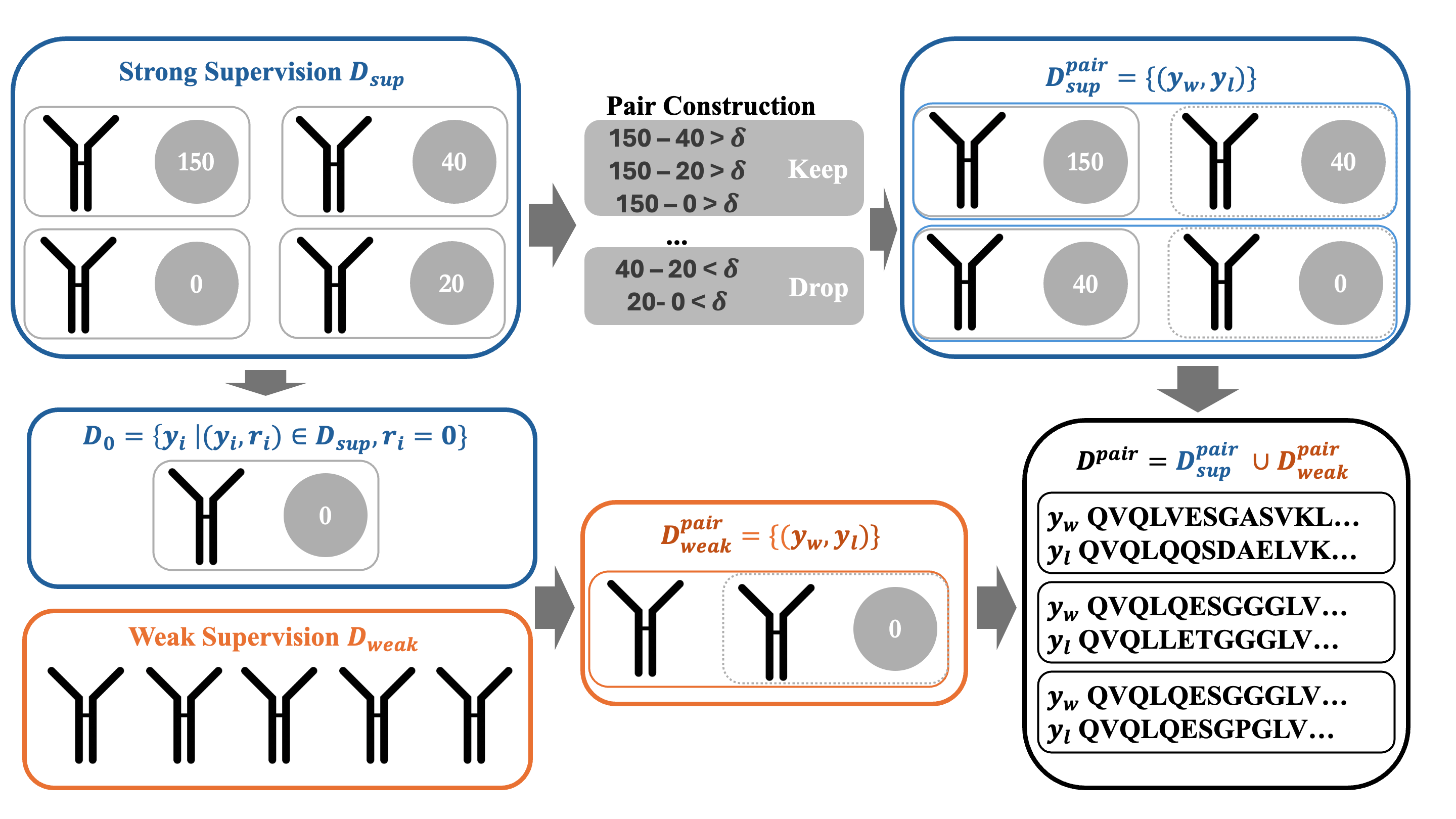
Quantitative yield differences and weak biological priors are expressed as relative preferences.
Scaling protein language models with large-scale weak supervision.
Kisoji Biotechnology Inc · University of Waterloo
Overview
Antibody expression ranking is critical to antibody design, but quantitative experimental labels are scarce. This work introduces a unified preference-learning framework that combines a diverse internal dataset of 1,254 labeled sequences with 4.2 million unlabeled, immunization-derived camelid antibodies. A union-masked likelihood approximation and IMGT alignment make Direct Preference Optimization efficient for variable-length protein sequences.
Quantitative yield differences and weak biological priors are expressed as relative preferences.
Union masking approximates sequence likelihood differences with a single forward pass per pair.
IMGT numbering provides a consistent coordinate system for comparing diverse VHH sequences.
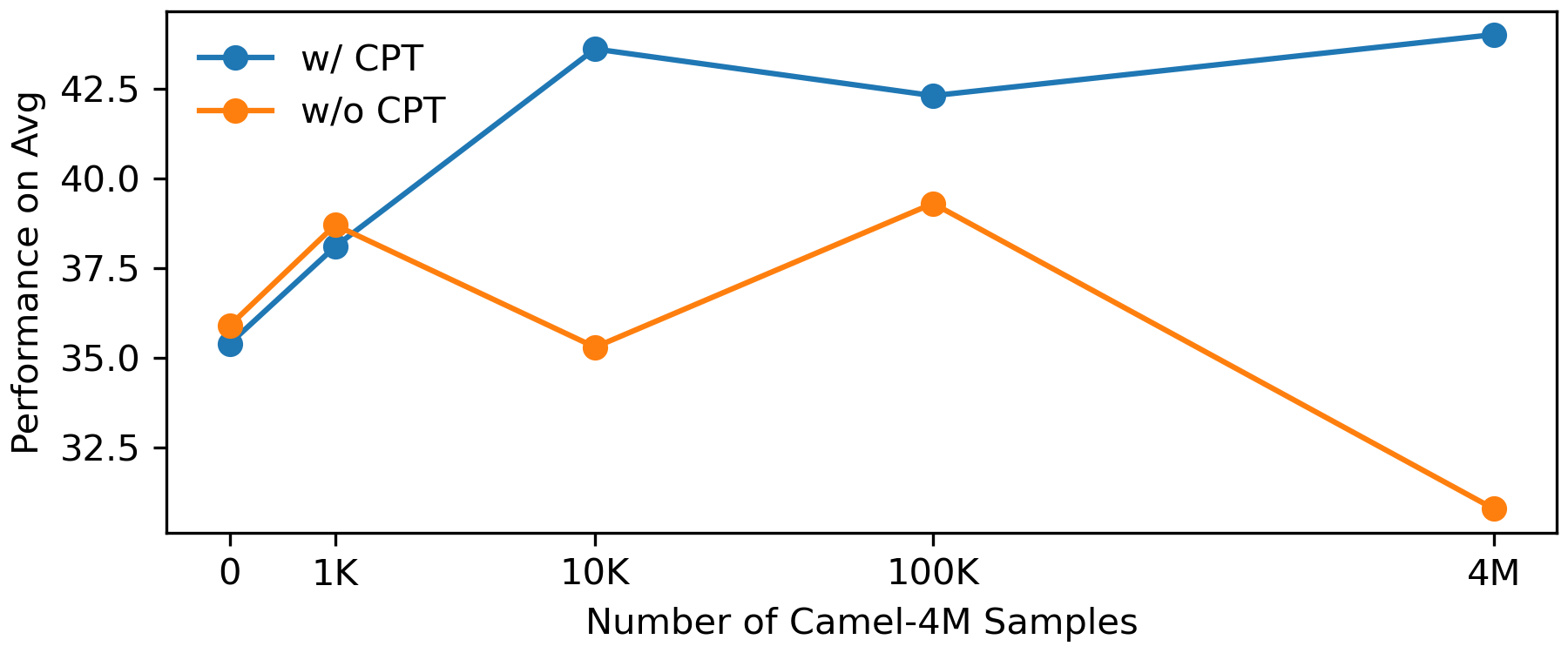
The two-stage pipeline continues to benefit as weak supervision grows from 1K to 4.2M samples.
Method
The pipeline adapts the backbone to antibody sequence space before aligning sequence likelihoods with expression preferences.
Masked language modelling on Camel-4M adapts each backbone to the antibody-specific sequence distribution.
DPO combines strong yield-derived pairs and weak immunization-derived pairs in a single objective.
Only positions that differ across an IMGT-aligned pair are jointly masked and evaluated.
Why it matters: exact pseudo-log-likelihood needs one forward pass per position. The union-mask approximation targets the relative score needed by DPO without evaluating unchanged positions.
Results
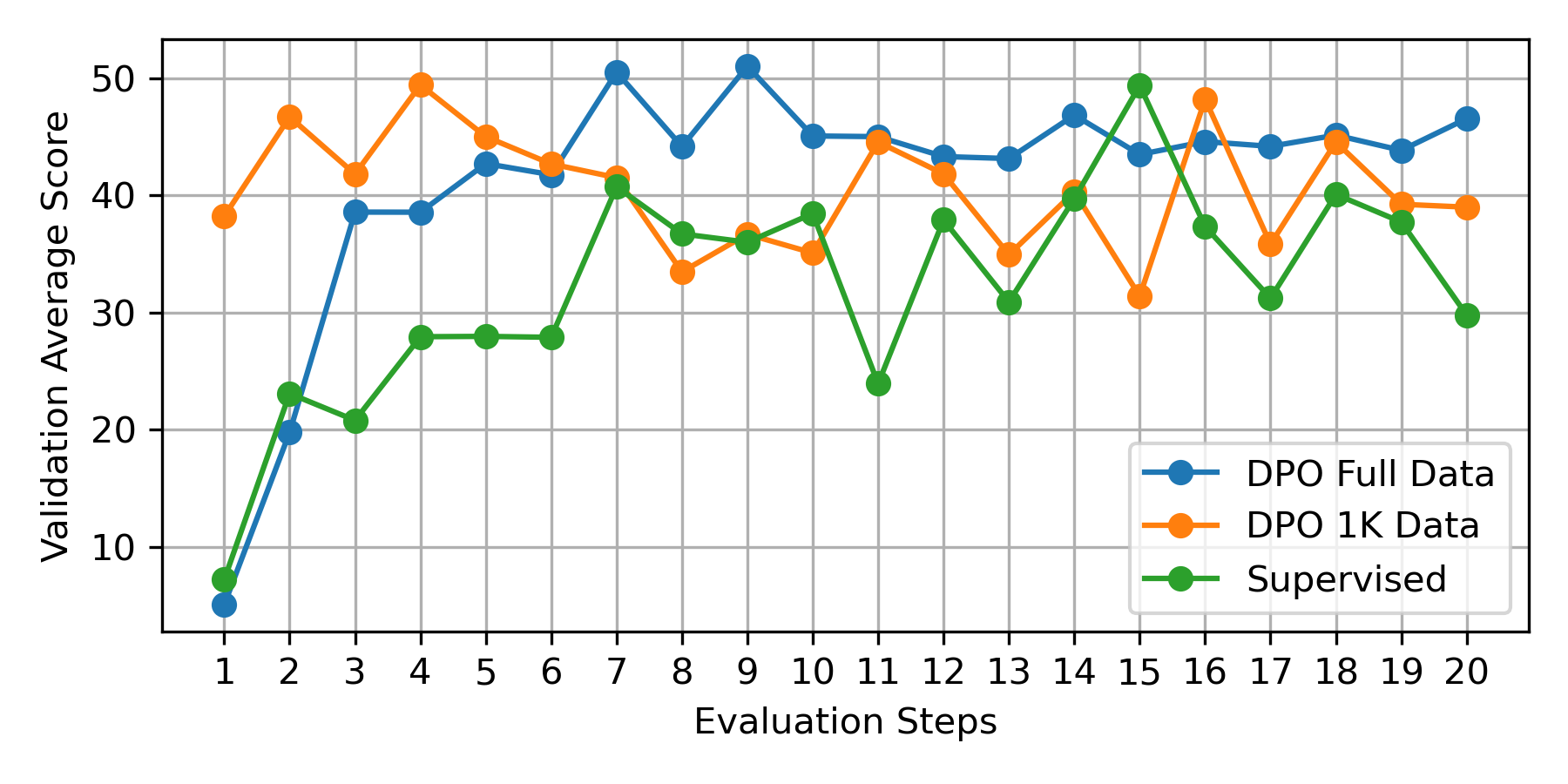
The full Stage I + II pipeline achieves the strongest overall performance across AntiBERTa2, IgBERT, and ProtBERT on the Exp-1K test set.
Composite Avg: 45.0 · Recall: 46.2
Composite Avg: 40.1 · Recall: 61.5
Composite Avg: 40.3 · Recall: 53.8
Data & analysis
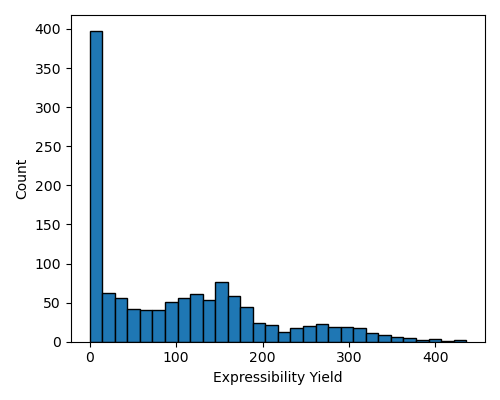
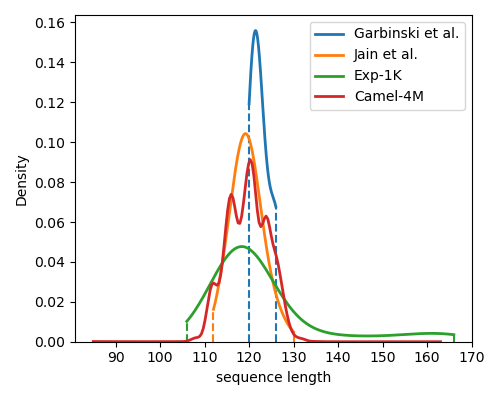
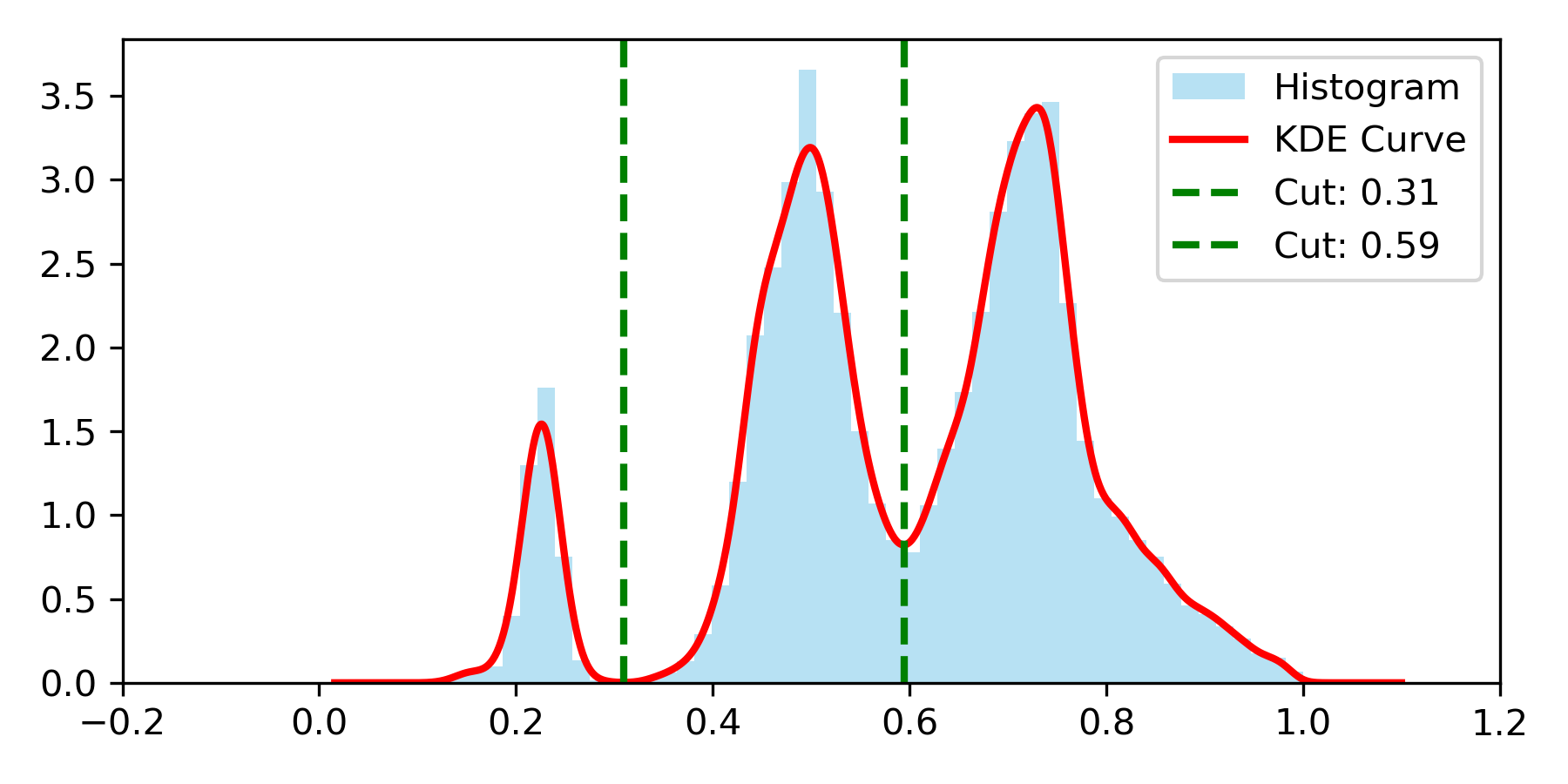
Exp-1K provides quantitative expression labels and realistic failure cases. Camel-4M contributes a broad weakly positive signal from immunization-derived VHH sequences.
1,254 unique VHH sequences, including 335 non-expressible candidates and substantial length variability.
4.2 million non-redundant, immunization-derived VHH sequences used for domain alignment and preference construction.
Citation
Accepted at the 43rd International Conference on Machine Learning (ICML 2026).
@inproceedings{sun2026preference,
  title     = {Preference-based Antibody Expression Ranking:
               Scaling with Large-scale Weak Supervision},
  author    = {Sun, Josh Qixuan and Babaie, Morteza and Hou, Wenyang
               and Crowley, Mark and Young, David},
  booktitle = {Proceedings of the 43rd International Conference
               on Machine Learning},
  year      = {2026}
}